Defining Moments in Casino History for Card and Wheel Games
Finley Becker · Oct 1, 2026
Defining Moments in Casino History for Card and Wheel Games
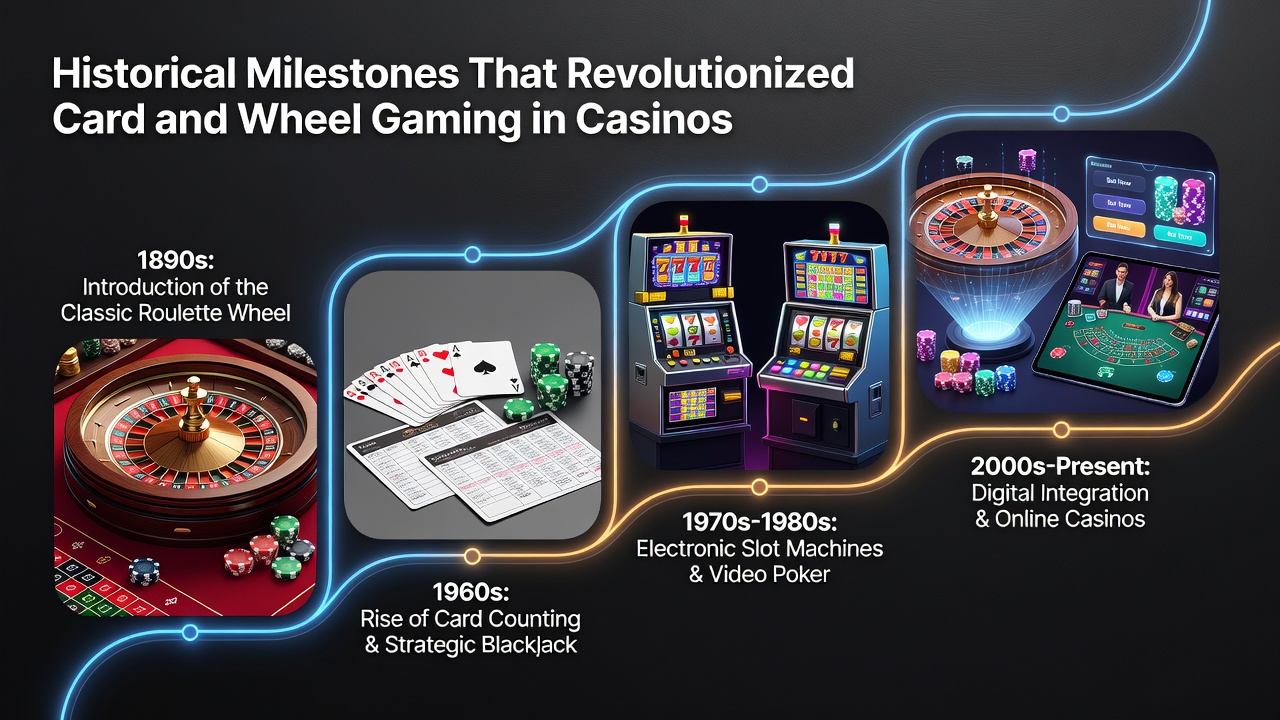
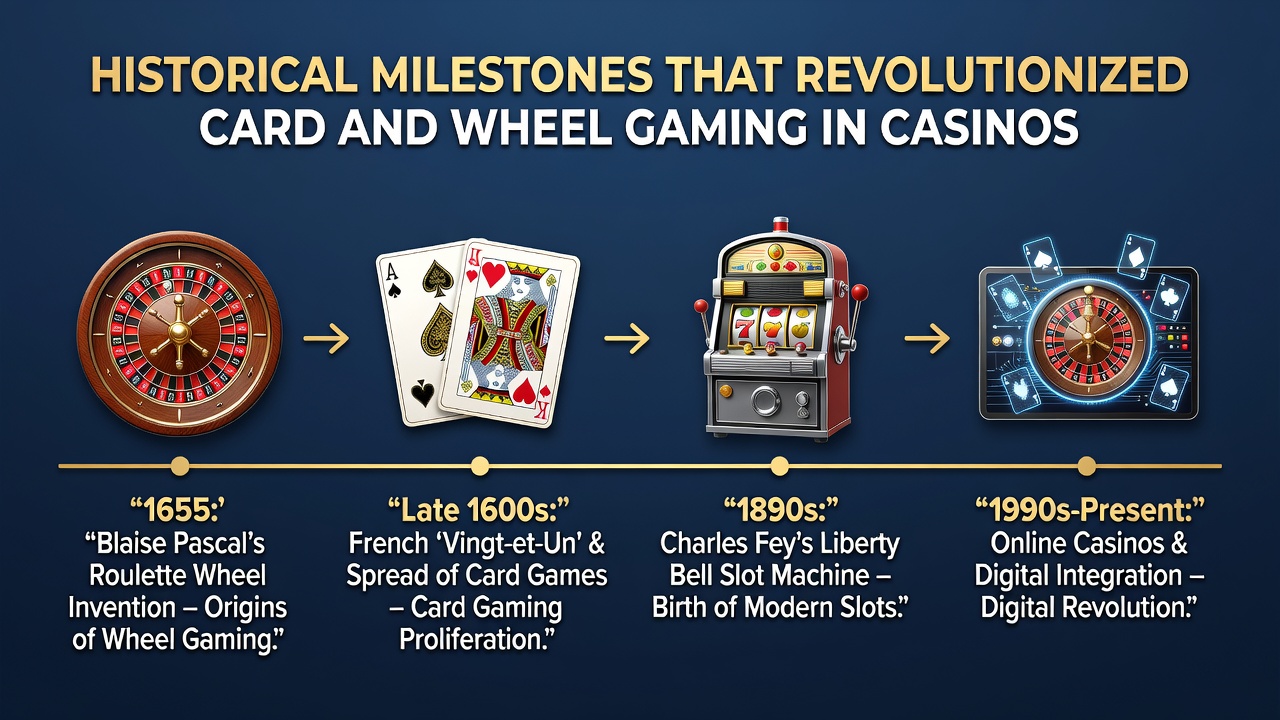
Playing cards emerged in China during the 9th century and reached Europe by the 14th century through trade routes, where they quickly adapted for gambling purposes in private clubs and public houses across Italy, France, and Spain, while wheel-based games trace roots to ancient spinning devices used in various cultures for divination and chance, with records showing their gradual integration into betting environments by the 1600s.
Early European Foundations
Venice established the first known public casino called the Ridotto in 1638 under government oversight to regulate gambling during carnival season, and this venue featured card games alongside early wheel variants that drew players seeking structured play, with historical documents from the period indicating that authorities imposed rules on stakes and hours to maintain order.
France advanced wheel mechanics in the 17th century when mathematician Blaise Pascal developed a primitive roulette device during attempts to create perpetual motion machines, and by the late 1700s French casinos refined the design into a 38-pocket wheel that included both zero and double zero, which operators installed in establishments like those in Paris and later exported to other regions.
Card Game Refinements in the 19th Century
Blackjack traces its lineage to French games such as vingt-et-un that crossed into American ports during the 1800s, where riverboat gamblers along the Mississippi adapted rules and introduced betting options that emphasized player decisions against the dealer, according to records preserved by the Nevada Gaming Control Board.
Dealers and players experimented with variations like the five-card draw format that influenced poker tables in New Orleans saloons, and these adaptations spread westward during the Gold Rush as mining camps established makeshift gaming tents that later evolved into permanent saloons with standardized decks and house rules.
American Expansion and Regulatory Shifts
Nevada legalized casino gambling statewide in 1931 amid economic pressures from the Great Depression, which prompted operators to open venues in Reno and later Las Vegas that combined card tables with roulette wheels in single locations, and data from state archives show visitor numbers rising steadily through the 1940s as transportation improvements connected remote desert sites to major cities.
The Nevada Gaming Control Board began licensing operations in 1959 to curb organized crime influence, and this framework required detailed financial reporting from establishments offering both blackjack and roulette, which created transparent standards that other jurisdictions later examined when drafting their own regulations.
Technological Introductions in the Late 20th Century
Electronic aids appeared in the 1970s when manufacturers introduced automated card shufflers that reduced manual handling time at blackjack tables, and casinos in Atlantic City adopted these devices after legalization in 1976 to handle higher volumes during peak seasons while maintaining game integrity.
Computerized roulette wheels entered testing phases in the 1980s with sensors that tracked ball speed and pocket outcomes, and industry reports from that era note their deployment in select European venues before wider acceptance in North American markets, where regulators verified fairness through independent audits.
Global Spread and Digital Transitions
Macau opened its first casino under Portuguese administration in the 19th century, yet major expansion occurred after 2002 when the government ended the monopoly and issued multiple concessions that led to integrated resorts featuring extensive card and wheel sections, with visitor statistics from regional tourism boards showing annual growth exceeding 20 percent in subsequent years.
Australia established the Australian Gambling Research Centre to examine patterns in table game participation, and its publications detail how electronic roulette terminals installed in the 1990s allowed simultaneous play across multiple wheels in venues from Sydney to Melbourne, thereby increasing accessibility without expanding physical floor space.
Current Developments Around 2026
Industry gatherings scheduled for October 2026 include sessions on updated sensor technologies for wheel games and secure digital interfaces for card dealing systems, with presentations drawing from data collected across multiple jurisdictions that highlight incremental efficiency gains in table operations over the prior decade.
Research institutions continue to track adoption rates of hybrid physical-digital tables that combine traditional felt layouts with overhead cameras for dispute resolution, and figures released through academic channels indicate these systems now appear in over 15 percent of regulated North American and Asian properties.
Conclusion
Historical records demonstrate that successive innovations in card production, wheel construction, venue licensing, and monitoring equipment collectively expanded participation in casino table games across continents, and regulatory bodies in diverse regions maintain archives that document these transitions through licensing data and operational statistics.